 Coverton Blog
Resize PDF pages with proportional fit or stretch
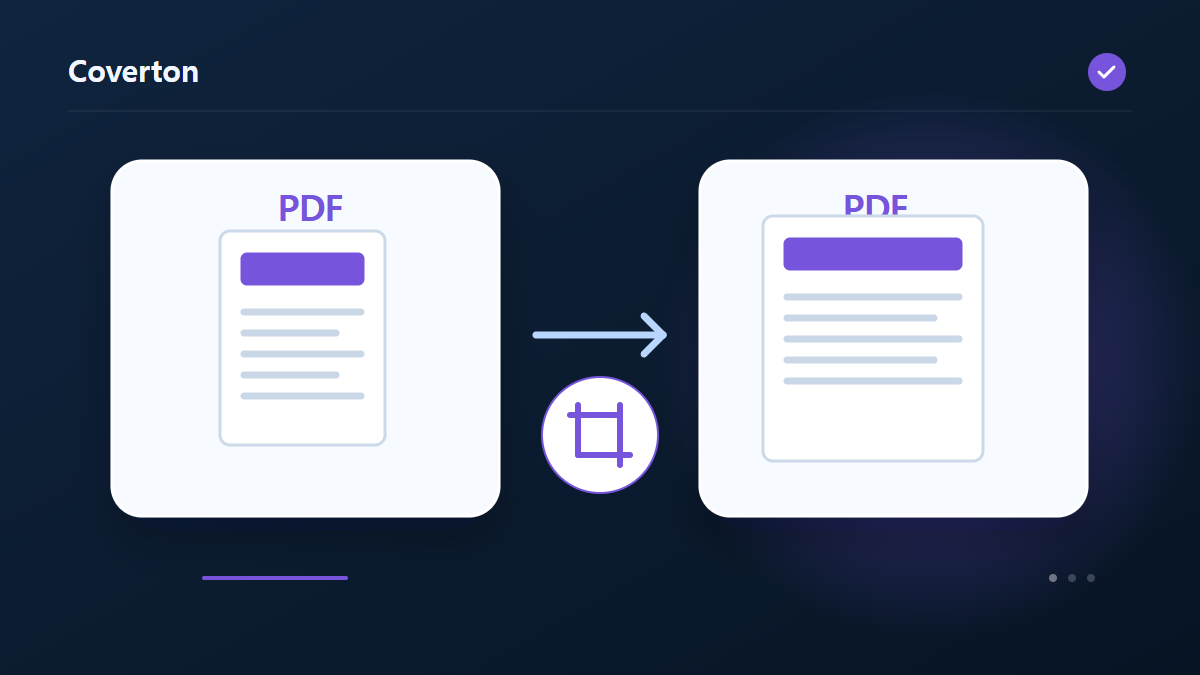
Set both the paper size and the content-fitting mode when standardizing PDF pages. Proportional fitting can leave margins, while stretching changes the width-to-height proportions of lettering and pictures.
How to use this tool
- Choose files in PDF format. Maximum files per batch: 1.
- Review Paper size, Paper width (mm), Paper height (mm), then start processing.
- Download the PDF result and check its content and quality.
Choose the right settings
Choose A4, Letter, A5 or custom size, entering custom dimensions in millimeters. Select proportional centered fitting or stretching according to whether preserving the content's shape is essential.
- Supported input
- Output
- Available settings
- Paper size
- Paper width (mm)
- Paper height (mm)
- Fit mode
Before you start
Define the document’s purpose
Keep the original and decide whether you need changed pages, a new document, extracted information or a report. A readable page is only part of a PDF: forms, bookmarks, annotations and existing signatures may also matter. Check this guide’s supported features before choosing the result for a formal submission.
For a tool that selects pages, distinguish positions in the file from numbers printed on the pages. For a document created from entered values, review the source values and their order instead. If size, placement or print layout can be set, test a page with dense text or content close to an edge before applying the choice more widely.
Make a short plan of the source files, their order and the changes you intend. For an existing PDF, note any page selection and the functions that must survive; for a newly generated document, keep the values from which it is built. If a problem appears only after a later operation, compare the intermediate copy with the original to locate the first change. Record the settings needed by the recipient, so a visually acceptable trial is not mistaken for a document that meets every requirement.
Check content and document behavior
Open the saved file and inspect the beginning, end and any place where content was moved, combined or divided. Compare counts and values with the source or your input list. When the output is a report or extracted text, check a few findings on the actual pages rather than treating an empty report as proof that nothing relevant exists.
If printing is the purpose, use print preview and a test sheet to check reading size and placement. Where interactive fields, links or signature verification matter, test them separately; appearance does not establish that they still work. If processing fails, review protection, format and the stated limits without discarding the original.
Example input and output
mixed-size PDF → selected paper-size PDFExamples describe the workflow. Results depend on the source file and settings.
Check the saved result before using it
Compare circles and lettering with the original for distortion. Click annotations and links to review their positions, and use print preview to inspect margins and any content clipped near the page edges.
If the result is different from what you expected
Annotation or link coordinates can fail to match the new content position in some PDFs. Verify clickable regions and page boundaries as well as the reported paper size before using the resized file.
Limits to keep in mind
- Page contents are scaled as a whole; paragraphs are not reflowed to the new paper size.
Continue with a related tool
This guide explains the public browser tool. Keep a copy of the original and inspect the result before sharing it.